
You Have a Job. You Still Need More Money.
Your paycheck covers rent and food—barely. There’s nothing left for emergencies, savings, or getting ahead. You need an extra $500-$1,500 per month, but you can’t afford to quit your job and gamble on a full-time business.
This guide is for people who:
- Work 35-45 hours per week already
- Have limited free time (evenings, weekends only)
- Need extra income NOW, not in 6 months
- Have a criminal record that limits traditional second jobs
- Can invest $0-$200 to start
The side hustles below are ranked by startup cost, time commitment, and realistic income potential. No hype. No promises of passive income. Just practical ways to add $500-$2,000 per month to your income while keeping your day job.
Reality check upfront: Working 50-70 hours per week is exhausting. Your social life will suffer. Your body will be tired. But if the alternative is staying broke or going back to illegal hustles, this is the better path. Do it for 6-12 months, build a cushion, then reassess.
Tier 1: Zero to Low Capital ($0-$100)
Phone and Electronics Flipping – The High-Margin Hustle
What it is: Buy broken or discounted phones, fix simple issues, resell for profit.
Why it works for reentry:
- Entirely online (Facebook Marketplace, OfferUp, eBay)
- No background checks, no bosses
- Learn repairs from YouTube in a weekend
- High profit margins ($75-$250 per device)
- Work from home in your free time
Startup costs:
- Precision screwdriver kit: $15-$25
- Suction cup and spudger tools: $8-$12
- First broken phone to practice: $50-$100
- Total: $75-$150
How it works:
- Find broken phones on Facebook Marketplace. Search “cracked iPhone” or “phone for parts.” Look for devices selling for $80-$150 that would retail for $300-$500 working.
- Diagnose the issue. Common problems: cracked screen, dead battery, water damage, charging port issues. Avoid iCloud-locked phones (worthless unless you can contact original owner).
- Buy replacement parts. Amazon and eBay sell iPhone screens ($25-$60), batteries ($15-$25), charging ports ($10-$20). Order OEM or high-quality aftermarket parts.
- Watch repair tutorials. YouTube channels like JerryRigEverything and Phone Repair Guru show step-by-step repairs. Most screen replacements take 30-60 minutes once you know what you’re doing.
- Test thoroughly before selling. Make sure screen works, touch is responsive, Face ID/Touch ID works, cameras function, no weird sounds or dead pixels.
- Resell on Marketplace. List at fair market value ($250-$400 for refurbished iPhones depending on model). Include photos of working phone, mention it’s refurbished, offer local pickup or shipping.
Realistic income:
- Beginner (first month): Fix 1-2 phones, profit $75-$150
- Intermediate (months 2-4): Fix 2-3 phones per week, profit $400-$700/month
- Experienced (months 5+): Fix 4-6 phones per week, profit $1,000-$1,800/month
Time investment: 3-5 hours per phone (sourcing, repair, listing, meetup). Plan for 8-15 hours per week once you’re moving volume.
Risks and realities:
- You will buy a phone you can’t fix. Budget for 1 in 10 being a loss. Sell for parts to recover some cost.
- Scammers exist. Meet in public places (police station parking lots are ideal). Test phone before handing over cash.
- Market fluctuates. iPhone values drop when new models release. Sell quickly, don’t hold inventory.
Pro tip: Specialize in one or two phone models (iPhone 11, 12, 13). Learn those repairs inside and out. Speed and quality increase profits.
Mini-motivation: Why Flipping Works
Most people underestimate small, repeatable wins.
Flipping works because the math is simple. If you average $80–$100 in profit per device, three deals a day can equal or beat a full-time paycheck.
Electronics are liquid. Phones, consoles, tablets — people always need them, and there’s always someone willing to sell fast for cash. You don’t need a store, employees, or credentials. You just need to buy right and sell consistently.
This isn’t theory. It’s volume plus discipline. One item is progress. Three items a day is freedom.
Furniture Flipping – Sweat Equity with Zero Capital
What it is: Pick up free or cheap furniture, clean it up, resell it.
Why it works:
- People throw away perfectly good furniture during moves
- Facebook Marketplace “free” section is a goldmine
- Requires almost zero cash, just labor and transportation
- Profit margins can be 300-500%
What you need:
- Access to a truck, van, or trailer (borrow or rent for $20-$40/day)
- Basic cleaning supplies (you probably have these)
- Screwdriver, wood glue, sandpaper for minor repairs ($20-$30)
How it works:
- Monitor “free” listings. Set alerts on Facebook Marketplace, Craigslist, and Nextdoor for “curb alert” or free furniture. Act fast—good pieces go in hours.
- Pick items with easy fixes. Solid wood furniture that just needs cleaning. Couches that need a steam clean or new slipcover. Dressers with a broken knob or loose drawer.
- Clean and stage photos well. Wipe down with Murphy’s Oil Soap. Fix minor issues. Take photos in good lighting against a clean wall. Staging sells furniture.
- Price competitively but not cheap. A refinished dresser you got for free can sell for $100-$250. A cleaned couch can go for $150-$400 depending on condition.
Realistic income:
- Flip 2-3 pieces per month: $300-$600/month
- Flip 4-6 pieces per month: $600-$1,200/month
Time investment: 4-8 hours per piece (pickup, cleaning, listing, sale coordination, delivery).
Limitations:
- Requires vehicle access
- Physical labor (heavy lifting)
- Holding space (garage, shed, or large apartment)
- Seasonal (slower in winter in some areas)
Common mistake: Taking everything that’s free. Be selective. Particle board furniture and heavily stained upholstery aren’t worth your time.
Furniture flipping isn’t fast money.
It rewards patience, space, and attention to detail. If you enjoy hands-on work and can wait days or weeks to get paid, it can work. If you need cash this week, look elsewhere
Scrap Metal Collection – Dirty Money, But It’s Money
What it is: Collect scrap metal (appliances, wire, car parts) and sell to scrap yards.
Why it works:
- Free material everywhere (Craigslist, curb pickup, apartment complexes)
- Scrap yards don’t care about your record
- Instant cash payment
- Scales with effort
What you need:
- Truck or van access
- Work gloves and basic tools
- Knowledge of scrap metal types (ferrous vs. non-ferrous, copper prices)
Best scrap items:
- Copper wire/pipe ($2-$4/lb): Highest value
- Aluminum (cans, siding, gutters): $0.40-$0.80/lb
- Steel appliances (washers, dryers, water heaters): $0.05-$0.12/lb
- Brass fixtures (faucets, doorknobs): $1.50-$2.50/lb
How it works:
- Find free scrap on Craigslist “free” section or drive around on trash day in nicer neighborhoods.
- Haul it to your local scrap yard (Google “scrap yard near me”).
- Separate metals by type (increases payout).
- Get weighed and paid same day.
Realistic income:
- Casual (10 hours/month): $200-$400
- Consistent (20 hours/month): $500-$900
Downsides:
- Dirty, physical work
- Scrap prices fluctuate (copper is best, but harder to find)
- Requires vehicle and gas money
- Some people look down on it (who cares, you’re making money)
Pro tip: Build relationships with apartment complex maintenance staff. They often have broken appliances they need removed. You get free scrap, they get free disposal.
Scrap metal isn’t a business by itself for most people.
But if you already do junk removal, landscaping, or trade work, separating metal can turn trash into extra cash. Copper and aluminum add up fast when you’re already hauling material anyway.
Think of this as a cash-flow bonus — not a career.
Tier 2: Some Capital Required ($100-$500)
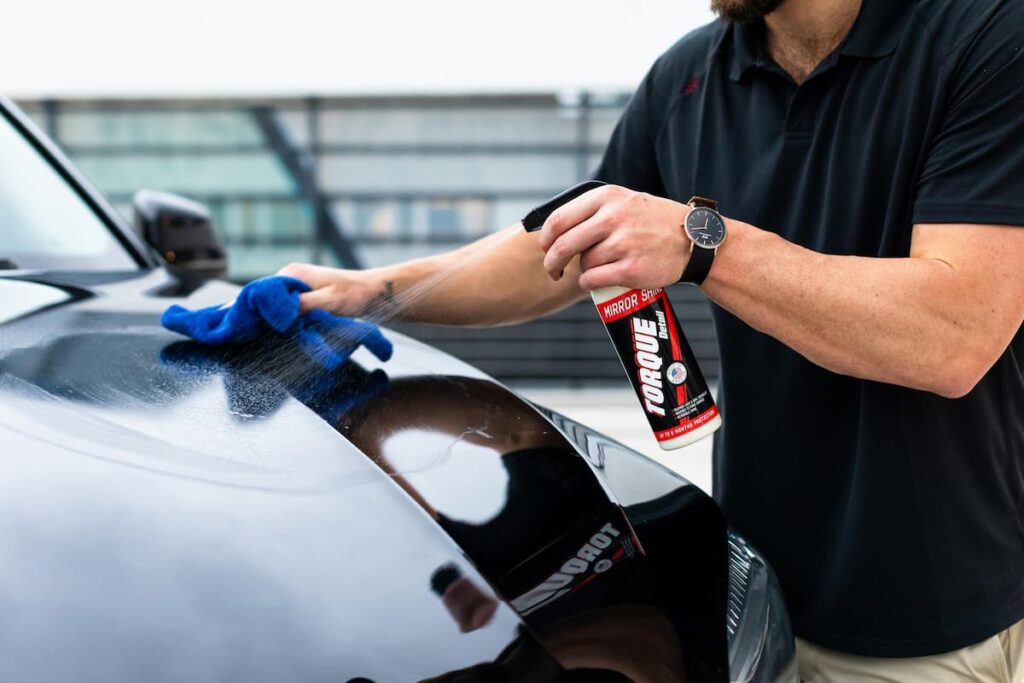
Mobile Car Detailing – Evenings and Weekends
What it is: Offer mobile car detailing services in your free time. You go to the customer’s driveway.
Why it works:
- No storefront needed
- Flexible scheduling (evenings after work, Saturdays, Sundays)
- Customers care about results, not your background
- Repeat business potential
Startup costs:
- Pressure washer or garden hose setup: $50-$150
- Shop vacuum: $40-$80
- Microfiber towels, brushes, buckets: $30-$50
- Car soap, wax, interior cleaner: $40-$60
- Water tank (if no water access at locations): $30-$100
- Total: $200-$450
Service pricing:
- Basic exterior wash: $30-$50
- Interior vacuum and wipe-down: $40-$70
- Full detail (inside + outside): $100-$150
- Add-ons: Wax ($20-$40), headlight restoration ($25-$50)
Realistic income:
- Detail 4-6 cars per weekend: $400-$900/month
- Scale to 8-10 cars per weekend: $800-$1,500/month
Time investment: 60-90 minutes per car. Plan for 10-15 hours on weekends.
How to get customers:
- Post on Facebook Marketplace and Nextdoor
- Offer first-time customer discount ($80 full detail instead of $120)
- Ask every customer for referrals
- Target apartment complexes and office parks (leave flyers on cars with permission)
Limitation: Weather-dependent. Rain cancels your weekend income.
Pressure Washing – Weekend Revenue Machine
What it is: Wash driveways, sidewalks, and home exteriors on Saturdays and Sundays.
Why it works:
- High demand, especially in spring and summer
- Charge $100-$300 per job
- Customers see immediate results
- Recurring revenue (customers want it done annually or quarterly)
Startup costs:
- Gas pressure washer (3,000-4,000 PSI): $250-$400
- Surface cleaner attachment: $80-$150
- Extension wands and nozzles: $50-$100
- Total: $380-$650
Service pricing:
- Residential driveway (2-car): $100-$150
- House exterior wash: $150-$300
- Deck or patio: $100-$200
Realistic income:
- 3-4 jobs per weekend: $600-$1,200/month
- 6-8 jobs per weekend (if you hustle): $1,200-$2,000/month
Time investment: 1-2 hours per job plus drive time. Plan for 12-16 hours on weekends if going hard.
Pro tip: Offer package deals. “Driveway + sidewalk + front porch = $200” converts better than individual pricing.
Short breakdown: what actually matters in pressure washing
In under a minute, this clip highlights the three things that decide whether a pressure washing business survives or dies: pricing discipline, understanding chemicals, and direct customer acquisition. No fluff — just the fundamentals most beginners ignore.
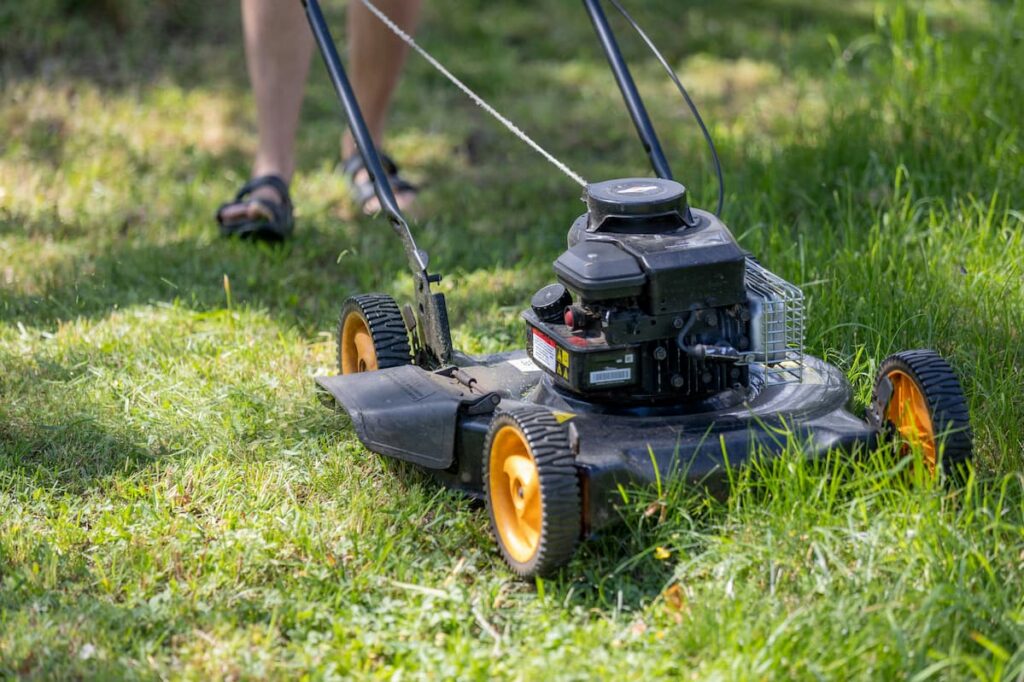
Lawn Mowing – The Summer Side Hustle
What it is: Mow lawns every Saturday morning during the growing season (April-October in most climates).
Why it works:
- Predictable, recurring revenue
- Quick jobs (30-45 minutes per yard)
- Physical but straightforward work
- No customer interaction needed after initial sale
Startup costs:
- Used push mower: $100-$200
- String trimmer: $80-$150
- Edger (optional): $60-$100
- Gas, oil, basic tools: $30-$50
- Total: $270-$500
Service pricing:
- Small yard: $30-$40 per mow
- Medium yard: $40-$60 per mow
- Large yard: $60-$100 per mow
Realistic income (weekly service model):
- 10 lawns every Saturday: $400-$600/month
- 15-20 lawns: $600-$1,200/month
Limitation: Seasonal in most areas. Make your money April-October, save for winter.
Tier 3: Online and Skill-Based Hustles
Freelance Writing and Data Entry
What it is: Remote work doing basic tasks for businesses—data entry, content writing, virtual assistant work.
Why it works:
- Completely remote and anonymous
- No background checks for freelance platforms
- Flexible hours (work nights after your day job)
- Scales with skill and hustle
Where to find work:
- Upwork (create profile, bid on jobs)
- Fiverr (create “gigs” people can purchase)
- Freelancer.com
- Remote job boards (We Work Remotely, FlexJobs)
Realistic income:
- Beginner: $300-$700/month working 10-15 hours/week
- Intermediate: $800-$1,500/month with better clients and skills
- Advanced: $2,000+/month if you specialize and build reputation
Time investment: Highly variable. Some weeks you grind 20 hours, some weeks you coast with 5.
Reality check: This is competitive. Your first month you’ll make almost nothing while building reviews and reputation. Stick with it for 2-3 months before deciding if it’s viable.
Best niches for beginners:
- Data entry and spreadsheet work
- Social media scheduling (use Canva and Buffer)
- Basic blog writing (use ChatGPT to assist, then edit and personalize)
- Virtual assistant tasks (email management, calendar scheduling)

Digital side hustles are real, but they’re rarely fast.
Retail Arbitrage (Amazon FBA or eBay Reselling)
What it is: Buy clearance or discounted items at retail stores, resell online for profit.
Why it works:
- Retailers constantly have clearance sales
- You’re essentially being a middleman between retail and online buyers
- Scalable—start small, grow as you learn
How it works:
- Find clearance items at Walmart, Target, or Home Depot. Use apps like Keepa or CamelCamelCamel to check if an item sells well on Amazon.
- Buy low, sell higher. If you find a toy on clearance for $8 that regularly sells for $25 on Amazon, buy 5-10 units.
- List on Amazon FBA or eBay. Amazon FBA handles shipping (you send inventory to their warehouse). eBay you ship yourself.
- Profit margins: Aim for 30-50% after fees and shipping costs.
Realistic income:
- Month 1-2: $200-$500 (learning curve, small inventory)
- Month 3-6: $600-$1,200/month
- Month 6+: $1,500-$3,000/month if you scale inventory
Startup costs: $200-$500 for initial inventory, plus Amazon seller fees ($39.99/month for professional account).
Limitation: Requires upfront capital and understanding of fees, shipping, and Amazon’s rules. Not for absolute beginners unless you’re willing to lose some money while learning.
Retail Arbitrage (Gary Vee – simplified)
Gary Vee explains that one of the fastest ways to turn small money into more money is flipping undervalued items. The concept is simple: visit thrift stores, garage sales, flea markets, discount retailers, and scan items with Amazon or eBay apps to check resale prices. The edge isn’t hype—it’s time spent searching, learning prices, and moving fast on small but repeatable profits.
Gig Apps: The Background Check Reality
The truth about gig economy apps:
Most gig apps (DoorDash, Uber Eats, Instacart, Lyft) run background checks. However, their standards vary and are often less strict than traditional employers.
What typically disqualifies you:
- Violent felonies
- Sexual offenses
- Major theft or fraud charges
- DUI within past 7 years (for driving gigs)
What often does NOT disqualify you:
- Drug possession charges (especially if over 7 years old)
- Non-violent misdemeanors
- Old charges (10+ years)
Apps worth trying:
- DoorDash/Uber Eats: Check your specific area—some markets are more lenient
- Instacart: Focuses on shopping/delivery, not rideshare
- TaskRabbit: Handyman/furniture assembly, less strict background checks in some markets
- Wonolo/Instawork: Day labor gigs, warehouse work, event staffing
Realistic income if accepted:
- 10-15 hours/week: $200-$400/month
- 20-25 hours/week: $500-$900/month
Pro tip: If you’re denied from one app, try another. Each company uses different background check services with different criteria.
Time Management: How to Work 60+ Hours Without Breaking
Here’s the reality: A 40-hour day job + 15-20 hours side hustling = 55-60 hour work weeks. Do this wrong and you’ll burn out in 6 weeks.
Strategies that work:
1. Batch your side hustle work
- Don’t try to hustle every single night
- Example: Phone flipping on Tuesday/Thursday nights (2-3 hours each), all day Saturday for sourcing/selling
- Give yourself 2-3 nights completely off per week
2. Protect your sleep
- 6-7 hours minimum or you will get sick and lose money
- If you’re working Saturday/Sunday, sleep in one of those days until 9-10am
3. Meal prep on Sundays
- Cooking every night eats your hustle time
- Prep 5-7 meals on Sunday, reheat during the week
- Saves 1-1.5 hours per day
4. Use your lunch break strategically
- List items for sale during lunch
- Respond to Marketplace messages
- Research pricing and competition
5. Say no to distractions
- Netflix, gaming, scrolling—these kill hustle time
- You’re in sprint mode for 6-12 months, not forever
- Social life will suffer temporarily. That’s the trade-off.
6. Track your hourly rate
- If you’re working 15 hours per week and making $400/month, you’re earning $6.50/hour
- Optimize or switch hustles if you’re below $12-15/hour
- Your time has value—don’t waste it on low-margin work
When to Quit Your Day Job
Don’t quit your job until you hit these benchmarks:
- Your side hustle earns 75-100% of your day job income for 3 consecutive months. One good month isn’t enough. You need proof of consistency.
- You have 3-6 months of expenses saved. Side hustles can have slow months. Your savings cover those gaps.
- Your hustle is scalable. Can you double your income by working more hours or hiring help? If not, you’re trading one job for another.
- You’ve tested full-time commitment. Take a week of PTO and work your side hustle full-time. If you hate it or can’t fill 40 hours, you’re not ready.
Red flags that mean you’re NOT ready to quit:
- ✗ You’ve only been hustling for 1-2 months
- ✗ Your income is inconsistent (great one month, terrible the next)
- ✗ You have no emergency fund
- ✗ You haven’t learned the business well enough to troubleshoot problems
Green lights that mean you’re ready:
- ✓ 4-6 months of consistent $2,500-$4,000/month from side hustle
- ✓ Emergency fund of $5,000-$10,000
- ✓ Clear plan to replace day job income within 60 days of quitting
- ✓ You’ve already turned down side hustle work because you’re too busy
Final Reality Check
Side hustles aren’t glamorous. You’ll be tired. Your friends will ask why you’re not hanging out anymore. Your body will hurt from working 12-hour Saturdays.
But here’s what you get in return:
- Extra $500-$2,000 per month
- Skills you can scale into a full-time business
- Proof that you can earn money without begging someone to overlook your record
- Options—the most valuable currency you can have
Most people quit after 30-60 days because it’s harder than they thought. If you can push through the first 90 days, you’re already in the top 20% of people who try this.
The choice is yours: stay broke and comfortable, or hustle for 6-12 months and change your financial situation permanently.
Next Steps
Pick one hustle from this list. Not three. Not five. One.
Commit to it for 90 days. Track every dollar earned. Adjust and optimize. If it’s not working after 90 days, pivot to another hustle on this list.
The goal isn’t to side hustle forever—it’s to build enough income and savings that you have real choices about your future.
Looking for full-time business ideas? Check out our guides on window cleaning, landscaping, junk removal, and other reentry-friendly businesses.
Need help with banking, legal setup, or other reentry resources? Visit our state-by-state directory for local support services, job training programs, and financial resources.
Your record doesn’t define your income. Your effort does. Now go make some money.