
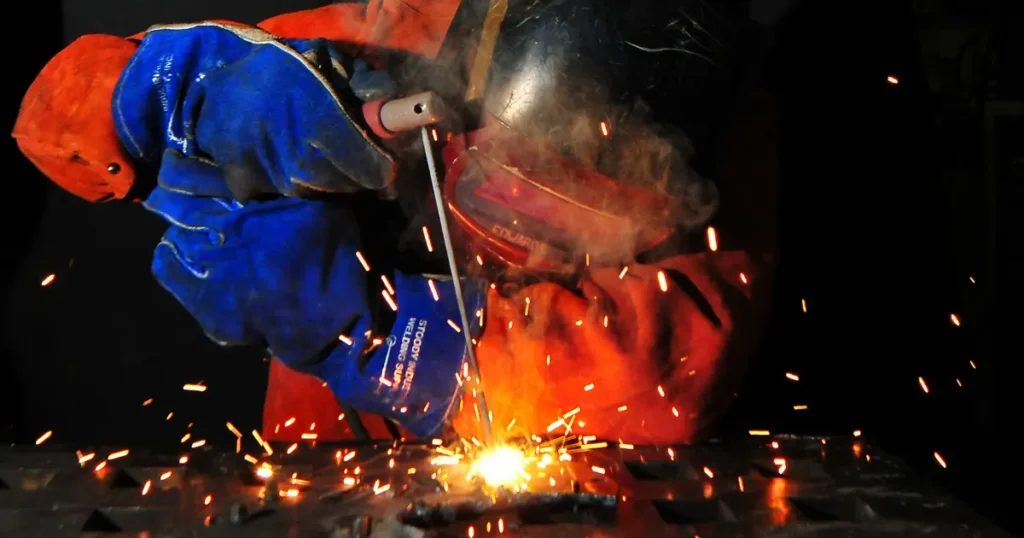
Most reentry failures are financial, not motivational. You run out of money before you finish training. Court fees pile up. Probation gets violated because you cannot afford transportation. Housing falls through. The system does not wait for you to complete a four-year apprenticeship.
Use this page as a filter: match the trade to your timeline, background-check tolerance, and income speed — not prestige.
Read top to bottom once — then jump directly to the trade category that matches your situation.
How Trades Actually Hire
Trades do not reject you because they are mean. They reject you because of gatekeepers you cannot see.
Insurance drives hiring more than employer intentions. A contractor might want to hire you. Their liability insurer says no. The contractor has no choice. This is why some trades are record-friendly and others are not — it is actuarial tables, not morality.
Site access matters more than skills. You can weld perfectly. If the refinery will not badge you, you do not work there. Federal facilities run deeper checks than private industrial sites. Remote sites care less.
Remote and hazardous work means lower scrutiny. The farther from populated areas and the more physically demanding the job, the fewer questions asked. Wind turbine techs working 300 feet up in rural Texas face less background scrutiny than HVAC techs entering suburban homes.
The Trade Speed Framework
Not all trades are equal for reentry. Evaluate on three metrics: entry speed (how long from zero to paycheck?), scrutiny level (how deep do checks go?), and pay ramp (how fast does income increase?).
Reentry Reality Rule: If a trade cannot pay you within 90 days, it is a luxury, not a solution. Build survival first.
| Trade | Entry Speed | Background Check | Pay | Best For |
|---|---|---|---|---|
| Utility-Scale Solar | 2–4 weeks | Visual/Basic | $22–$28/hr | Fast cash, physical work |
| Shutdown Scaffolding | 1–2 weeks | Visual/Basic | $25–$35/hr | Short-term income surges |
| Industrial Welding | 3–6 months | Standard 7-year | $30–$45/hr | Skill plus stability balance |
| Wind Turbine Tech | 4–6 weeks | Visual/Basic | $25–$40/hr | Travel, risk tolerance |
| Electrician Union | 2–4 years | Deep/FBI | $35–$55/hr | Long runway plus stability only |
| Marine Deckhand | 2–4 weeks | TWIC required | $24–$35/hr | Housing-insecure reentry |
| HVAC Residential | 1–2 years | Deep/Bonded | $28–$48/hr | Customer trust required |
Background check levels: Visual/Basic = minimal screening. Standard = typical 7-year criminal history check. Deep = FBI-level, bonding, or clearance-driven screening.
Speed beats prestige when you are in survival mode. A $25/hr job you can start in three weeks outperforms a $50/hr job that takes three years to access.
Fast-Income Trades
These trades get you paid fast with minimal barriers. They are physically hard and often temporary. That is why they work.
Shutdown and Turnaround Work
Workers are hired in bulk with minimal screening, and 60–80+ hour weeks with overtime can produce $15,000–$20,000 over 6–8 weeks when conditions are right. Verify overtime rates, per diem, and housing arrangements before you travel.
Work includes scaffolding, insulation removal, general labor, equipment cleaning, and firewatch. Hot, dirty, repetitive work — which is exactly why they hire broadly.
Most shutdown labor is sourced through industrial staffing agencies. To work a refinery turnaround, you need to be in the database of agencies that hold the contracts. Search “refinery shutdown jobs [your state]” or “turnaround labor.” See: Staffing Agencies: What Gets Tracked.
The Binge and Purge Income Model
Shutdown work allows a different financial strategy than traditional employment. Work 60–80 hours per week for 6–10 weeks. Bank significant income. Take 4–8 weeks off to handle probation, housing, health, and mental reset. Repeat.
This works for people who burn out in traditional 9-to-5 jobs, need concentrated income to knock out debt, or prefer intense work periods with real breaks. It does not work if you need steady paychecks or cannot handle physical extremes.
Utility-Scale Solar
Not residential rooftop solar — utility-scale solar means massive solar farms in rural areas supplying regional power grids. Federal subsidies are driving high demand through 2030+. Crews of 50–200+ workers with low scrutiny hiring. Remote locations mean fewer gatekeepers.
Pay starts at $22–$28/hr, reaching $30–$38/hr with experience. Apply directly to companies like Swinerton Renewable Energy, McCarthy Building Companies, and Mortenson, or through staffing agencies. Search “solar laborer jobs” plus your region.
Other Fast-Entry Trades
Scaffolding: Erecting and dismantling scaffolding at construction sites and refineries. $20–$30/hr, hired quickly, physical and heights-based.
Industrial Insulation: Removing and installing insulation in plants and facilities. Dirty, hot work. $22–$32/hr, low barriers.
Marine Deckhand: Working on tugboats, barges, and offshore supply ships. Housing provided on vessel, 20–30 days on with 10–20 days off. Solves housing instability while banking money. TWIC required — apply early.
The pattern: the less desirable the work, the faster you get hired and the fewer questions asked.
Skill Trades With a Short Runway
Industrial Welding
Welding has a shorter runway than electrician or plumber paths when focused on industrial work — not custom or residential fabrication. Training takes 3–6 months at a community college or vocational school ($3,000–$8,000, often WIOA-eligible).
Travel welding (pipelines, refineries, shipyards) has higher tolerance for records than shop work. AWS and ASME certifications matter more than background in many industrial settings. Pay starts at $30–$45/hr, reaching $50–$70/hr with travel and specialized certs.
Path in: Get OSHA 10, complete welding certificate, apply to industrial contractors. Target pipeline work, shipyards, and power plants — not residential fabrication shops.
Wind Turbine Technician
Wind energy is growing fast and wind turbine techs are in short supply. The job is dangerous, remote, and physically hard — which is why it hires people with records. Certificate programs run 4–6 weeks at community colleges. Some employers train on the job.
Pay is $25–$40/hr, often with travel per diem. Drawbacks: climbing 200–400 foot towers, confined spaces, weather exposure, weeks away from home. Not viable if you have fear of heights or claustrophobia.
Trades to Be Careful With
These are good careers for the right person at the right time. They are bad starting points for many people with records.
Electrician (Union Apprenticeship): 4–5 year apprenticeship. Low pay first 1–2 years ($15–$18/hr). High licensing scrutiny. Customer-facing work requires bonding. Good long-term — bad if you need income in 6 months.
HVAC (Residential): 1–2 year training plus licensing. Customer trust essential — you are in people’s homes. Background checks and bonding standard. Industrial HVAC (factories, hospitals, commercial buildings) is more accessible than residential.
Plumbing: Licensing varies by state. Residential requires customer trust and bonding. Commercial and industrial plumbing more accessible but still requires 2–4 year apprenticeship in most states.
The pattern: long low-paid periods early, heavy licensing with background checks, customer-facing trust requirements, insurance and bonding barriers. Not bad careers — bad starting points without time, savings, or clean access.
Certifications and Barriers
OSHA 10/30: Get OSHA 10 first ($50–$100, online, one day). Required or helpful on most industrial sites. OSHA 30 for supervisor roles ($150–$250, three days).
TWIC: Required for many port, refinery, and maritime jobs. Felonies are not automatic disqualifiers — waivers and appeals exist for many offenses. Processing can take weeks (sometimes longer), so apply early while you pursue other options. Cost: $125–$135.
Rule: Never pay for trade school training before confirming you can access the jobs. Verify licensing requirements, background check policies, and insurance barriers before spending money.
Decision Framework
No savings, need money in 4–8 weeks: Shutdown/turnaround work, utility-scale solar, scaffolding, industrial labor.
Some savings ($2k–$5k), can wait 3–6 months: Industrial welding, wind turbine tech, marine deckhand with TWIC application started.
Stable housing and income, thinking long-term: Use fast trade as bridge income while pursuing electrician, HVAC, or plumbing apprenticeship — or keep working fast trades and banking toward other goals.
Assess your survival timeline first. Match the trade to that timeline. Use fast trades to fund longer-term decisions.
Next Steps
→ Second Chance Employers List — 100 verified companies that hire people with records, organized by industry with background check notes and conviction type flags
→ Paid vs Unpaid Apprenticeships After Prison — If you’re choosing between structured programs and paid on-the-job training
→ Work and Income After Prison — Full income path system and sequencing framework
→ Staffing Agencies: What Gets Tracked — How to get into industrial staffing databases for shutdown work
→ Train or Work First? — If you’re still deciding whether trades or immediate work is the right move